


Pregnancy
An Exercise Ball in Pregnancy: Questions to Take to Your Ob-Gyn
Exercise balls are often sold for pregnancy. Whether and how you use one is a decision for you and your ob-gyn, so here is what the doctors' college says and what to ask at your next visit.
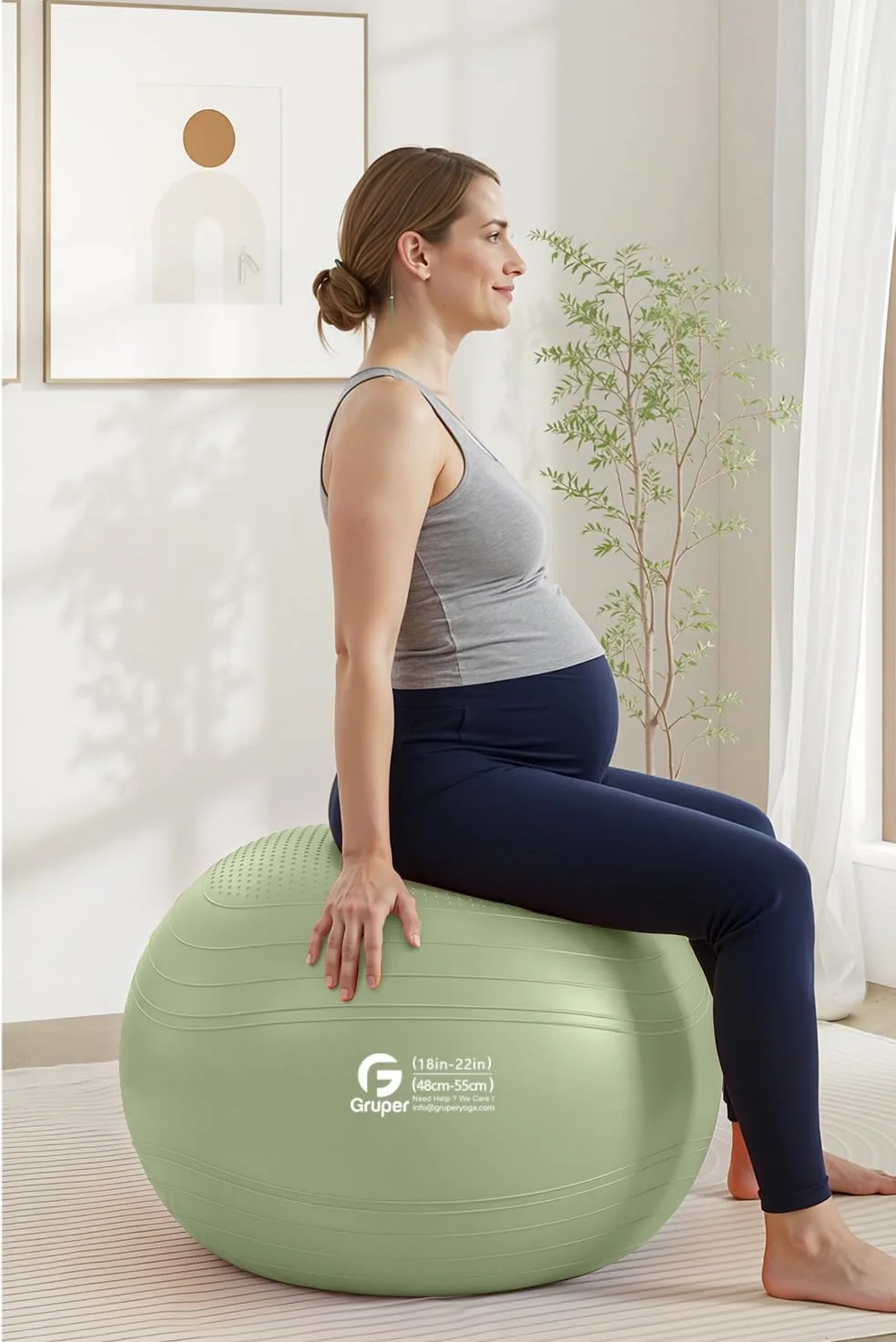
If you have been looking at exercise balls while pregnant, you will have seen the words birthing ball and pregnancy ball on a lot of boxes. A ball is a piece of equipment, though. What is safe for you to do on it depends on your pregnancy, and the person who knows your pregnancy is your ob-gyn or midwife.
What you can do before the appointment is read what the American College of Obstetricians and Gynecologists tells patients, write down your questions, and know which ball size fits your height in case the answer is yes.
What ACOG says about exercise in pregnancy
ACOG's patient FAQ on exercise during pregnancy starts with a plain answer: if you are healthy and your pregnancy is normal, it is safe to continue or start regular physical activity. It adds that you should discuss exercise with your ob-gyn at your early prenatal visits, and that if they give you the OK, you can talk through which activities fit.
It suggests at least 150 minutes of moderate-intensity aerobic activity a week, split however suits you, and starting slowly if you are new to exercise. It also names the activities its experts agree are safest, and the ones to avoid.
| ACOG lists as safest | ACOG lists to avoid |
|---|---|
| Walking | Contact sports and sports with a risk of a hit to the abdomen |
| Swimming and water workouts | Activities that may end in a fall, such as skiing, surfing, off-road cycling, gymnastics and horseback riding |
| Stationary bicycling | Hot yoga and hot Pilates, which may cause overheating |
| Modified yoga and modified Pilates | Skydiving, scuba diving, and activity above 6,000 feet if you do not already live at altitude |
Notice the word modified. ACOG points to prenatal yoga and Pilates classes designed for pregnancy, which teach poses adapted to a shifting balance, and it advises avoiding poses that need you to stay still or lie on your back for long periods.
ACOG also notes that if you are an experienced runner, jogger or racquet-sports player, you may be able to keep doing those activities after discussing them with your ob-gyn. The list depends on where you start from, and so does the answer about a ball.
Why balance matters more now
Two of the body changes ACOG describes bear directly on a ball. Pregnancy hormones relax the ligaments around your joints, which makes them more mobile and more prone to injury, so ACOG advises against jerky, bouncy or high-impact moves. And the extra weight in front shifts your center of gravity, so you are less stable and more likely to lose your balance and fall.
A ball is, by design, an unstable seat. That is worth saying out loud at your appointment, together with what you plan to do on it: sit, rock gently, stretch, or something more active. The answer for sitting at a desk may well be different from the answer for a workout.
Sitting is not the only use people have in mind, either. Some want a ball for gentle stretches, some for a desk, some for later in pregnancy or for labor. Each of those is a separate question for your ob-gyn, and it helps to name the one you mean.
Questions to take to your appointment
- Is it fine for me to sit on an exercise ball, and for how long at a time?
- Are there movements on a ball I should avoid at my stage of pregnancy?
- Should someone be with me, or should the ball be against a wall, when I use it?
- Is there a prenatal class near me where I can learn the movements with a teacher?
- If I want to use a ball during labor, is that something my hospital or birth center allows?
Bring the size of the ball you are thinking of, or the ball itself if you already have one. A concrete question about a concrete ball gets a more useful answer than a general one.
Write the answers down during the visit. Advice can change as the weeks go on, so the same questions are worth asking again later in pregnancy, especially if your plans for the ball change from sitting to something more active.
Signs to stop
ACOG lists warning signs that mean you should stop exercising and call your ob-gyn. They include bleeding from the vagina, feeling dizzy or faint, shortness of breath before starting, chest pain, headache, muscle weakness, calf pain or swelling, regular painful contractions, and fluid gushing or leaking from the vagina. Keep that list somewhere you will see it. If you use the ball alone at home, keep your phone within reach, so that calling is one movement away.
The same page also advises avoiding lying flat on your back as much as possible, staying well hydrated, and not getting overheated. That last point is the reason hot yoga and hot Pilates are on its list of things to skip.
If your doctor says yes: picking the size
The size of the ball follows your height, not your pregnancy. The chart printed with our balls puts 5'1" to 5'7" on the 65 cm ball and 5'8" to 6'2" on the 75 cm ball. Sitting on it with feet flat, your hips should sit level with your knees or a little higher. If a ball leaves your hips lower, it is too small or under-inflated.
If you sit between two rows of the chart, ask at the appointment which way to go rather than guessing. Bring your height and the height of any desk or bed edge you plan to sit beside, and the answer can be about your room, not a room in general.
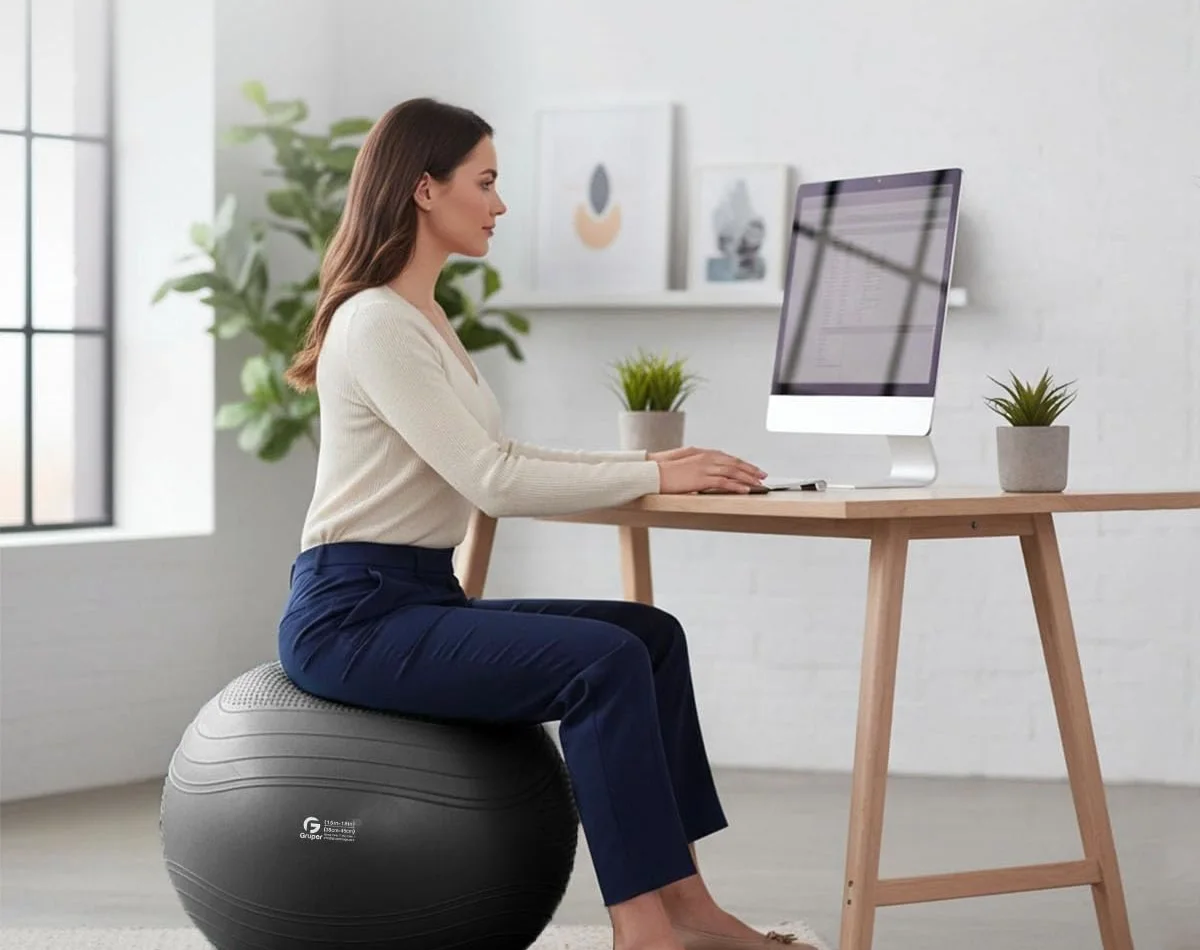
Pump the ball up gradually and keep it on a floor where it will not roll away from you, close to a wall or a sturdy chair you can hold. The same check works at a desk, and our piece on sitting on a ball at a desk has the desk heights that go with each size.
Which of our balls, and what comes with it
Our anti-slip stability ball has a glazed, grippy finish and a stated load of 300 lb. Our ridged ball has the thickest wall we make, 2.8 mm, and a patch of massage beads you will feel when you sit. Both deflate slowly rather than bursting if punctured, according to their product notes, and both come with a foot pump, two air plugs and a plug remover. Our classic ball comes in five colors, with a stated load of 300 lb and an anti-burst build that leaks air slowly if punctured.
The ball size guide has the full chart with desk heights, and the yoga and exercise balls shelf shows every color of all three balls.
